Digital marketing has become so deeply integrated into business growth that it’s no longer a separate activity—it is marketing. From startups and personal brands to global enterprises, every business today relies on digital channels to reach, engage, and convert its audience.
In simple terms, digital marketing refers to promoting products or services through online channels such as search engines, social media, email, websites, and paid advertising.
If you’re a business owner or marketer wondering where to start, this guide breaks down the types of digital marketing, proven strategies, and best practices for 2025—without the fluff.
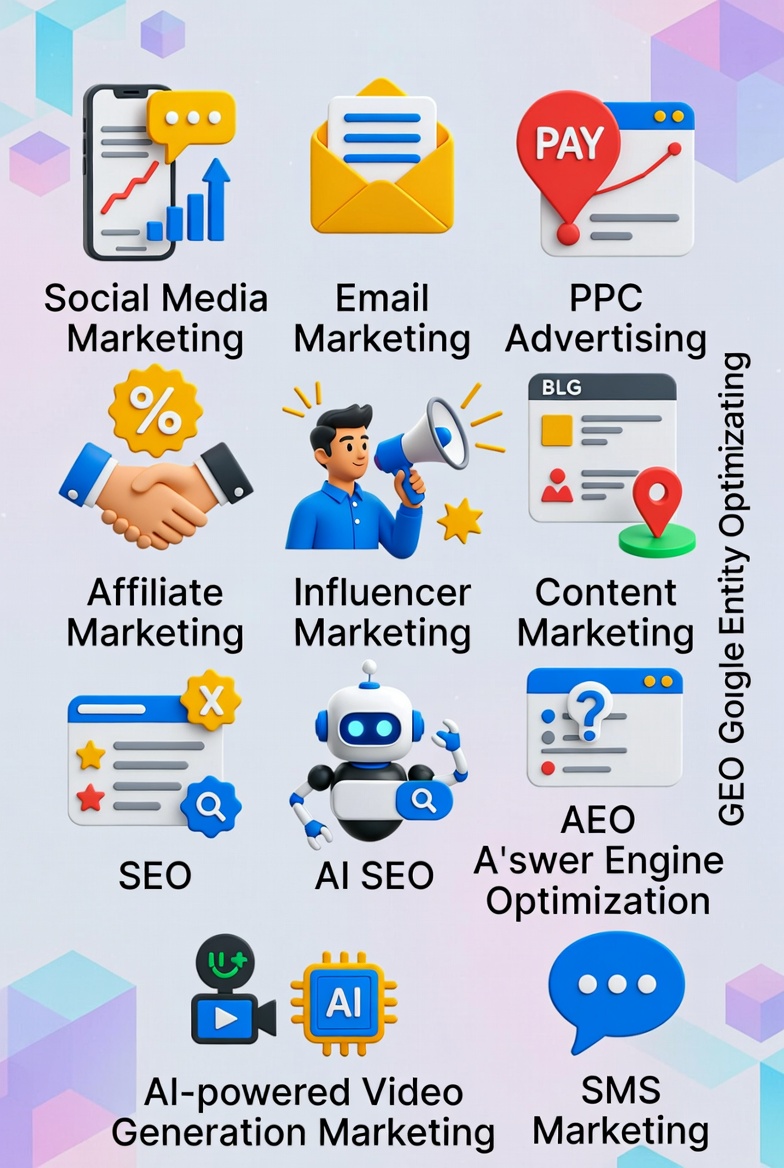
7 Types of Digital Marketing
Digital marketing offers many paths, but you don’t need to master all of them at once. The smartest approach is to choose one or two channels that align with your goals, execute them well, and scale from there.
1. Social Media Marketing
Social media remains one of the most powerful and cost-effective digital marketing channels. Platforms like Instagram, Facebook, LinkedIn, X (formerly Twitter), and TikTok allow brands to connect directly with their audience where they already spend time.
Social media works best when it’s relationship-driven, not sales-heavy. A commonly followed framework is the 80/20 rule:
- 80% educational, entertaining, or informative content
- 20% promotional content
In 2025, storytelling, short-form video, and community interaction matter more than follower count. Authentic brands consistently outperform overly polished advertisers.
2. Email Marketing
Email marketing continues to deliver one of the highest ROIs in digital marketing. Unlike social media platforms, your email list is an asset you fully own.
Email marketing typically starts with:
- A lead magnet (free guide, discount, checklist, etc.)
- A welcome email sequence
- Regular value-driven newsletters or offers
With AI-powered personalization and automation, email marketing in 2025 is smarter, more targeted, and more effective than ever.
3. Pay-Per-Click (PPC) Advertising
PPC advertising allows businesses to buy visibility instantly. You only pay when someone clicks on your ad, making it a highly measurable and controllable strategy.
Common PPC formats include:
- Search Ads: Appear when users search for specific keywords
- Display Ads: Visual banner ads across websites
- Social Media Ads: Paid campaigns on Meta, LinkedIn, TikTok, and others
PPC is ideal for product launches, limited-time offers, and fast traffic growth.
4. Affiliate & Influencer Marketing
This strategy involves partnering with creators, bloggers, or industry voices who already have an engaged audience.
- Affiliate marketing: Partners earn a commission per sale
- Influencer marketing: Creators promote your brand organically
Micro-influencers often deliver better engagement and trust than large influencers, especially for niche markets.
5. Content Marketing
Content marketing focuses on creating valuable, relevant, and consistent content to attract and retain an audience. This includes:
- Blog articles
- Videos
- Podcasts
- Guides and case studies
Instead of pushing sales, content marketing builds authority and trust, making it a powerful long-term growth strategy.
6. Search Engine Optimization (SEO)
SEO helps your website rank higher on search engines like Google, driving free and consistent organic traffic.
SEO involves:
- Keyword research
- On-page optimization
- Technical improvements
- High-quality content creation
While SEO takes time, it’s one of the most reliable digital marketing investments for sustainable growth.
7. SMS Marketing
SMS marketing reaches customers directly on their phones, offering extremely high open rates.
Best practices include:
- Short, clear, value-driven messages
- Explicit opt-in consent
- Easy opt-out options
Used correctly, SMS is excellent for promotions, reminders, and exclusive offers.
Best Practices for Digital Marketing in 2025
1. Be Authentic and Human
In an era flooded with AI-generated content, authenticity is the strongest differentiator. Audiences respond to real stories, real people, and real values.
Brands that communicate transparently and emotionally build stronger trust and loyalty.
2. Track Data and Optimize Continuously
One of digital marketing’s biggest advantages is measurability. Track:
- Traffic
- Engagement
- Conversions
- Cost per lead
- ROI
Successful brands test, analyze, and refine continuously instead of relying on guesswork.
3. Think Beyond Trends
Before launching campaigns, align your marketing with your brand’s core values and long-term vision. The most impactful campaigns don’t chase trends—they express purpose and clarity.
How Digital Marketing Drives Revenue
Digital marketing fuels growth through a connected ecosystem:
✔ Increased Visibility & Traffic
SEO, PPC, and content marketing help businesses stand out in crowded markets.
✔ Data-Driven Decisions
Campaign analytics reveal what works and what doesn’t, improving ROI.
✔ Higher Conversions
Optimized websites, CRO strategies, and content-driven journeys turn visitors into customers.
✔ Targeted Campaigns
Digital platforms allow precise targeting by intent, location, interests, and behavior.
✔ Stronger Customer Retention
Email, content, and social media nurture long-term customer relationships.
✔ Cost-Effective Growth
Compared to traditional marketing, digital marketing delivers higher ROI with better budget control.
Bottom Line
Digital marketing doesn’t have to be overwhelming. Start small, focus on what matters most to your audience, and grow strategically.
In 2025, success isn’t about chasing clicks—it’s about building trust, relevance, and long-term value.
About the Sponsor
ABAB Technologies is a full-service digital marketing and technology company serving clients across the UAE and India, specializing in SEO, PPC, social media marketing, web development, and growth strategy.
📞 Contact: +971 54 428 2694 | +91 80866 66381