




| Rank | Car | Top Speed | Power | Type |
|---|---|---|---|---|
| 1 | YANGWANG U9 Xtreme | 496.22 km/h | 3,000+ PS | Electric |
| 2 | Bugatti Chiron Super Sport 300+ | 490.48 km/h | 1,600 hp | W16 Petrol |
| 3 | SSC Tuatara | 455.3 km/h | Up to 1,750 hp | V8 Petrol |
| 4 | Bugatti W16 Mistral | 453.91 km/h | 1,600 PS | W16 Petrol |
| 5 | Koenigsegg Agera RS | 446.97 km/h | Up to 1,360 hp | V8 Petrol |
| 6 | Bugatti Tourbillon | 445 km/h | 1,800 hp | V16 Hybrid |
| 7 | Hennessey Venom F5 | 437+ km/h tested | 1,817 hp | V8 Petrol |
| 8 | Hennessey Venom GT | 435.31 km/h | 1,244 hp | V8 Petrol |
| 9 | Rimac Nevera R | 431.45 km/h | 2,107 hp | Electric |
| 10 | Bugatti Veyron Super Sport | 431.07 km/h | 1,200 PS | W16 Petrol |
The measurement method differs between cars, so these figures should not be treated as identical types of records.
1. YANGWANG U9 Xtreme – 496.22 km/h


The electric car that came closest to 500 km/h
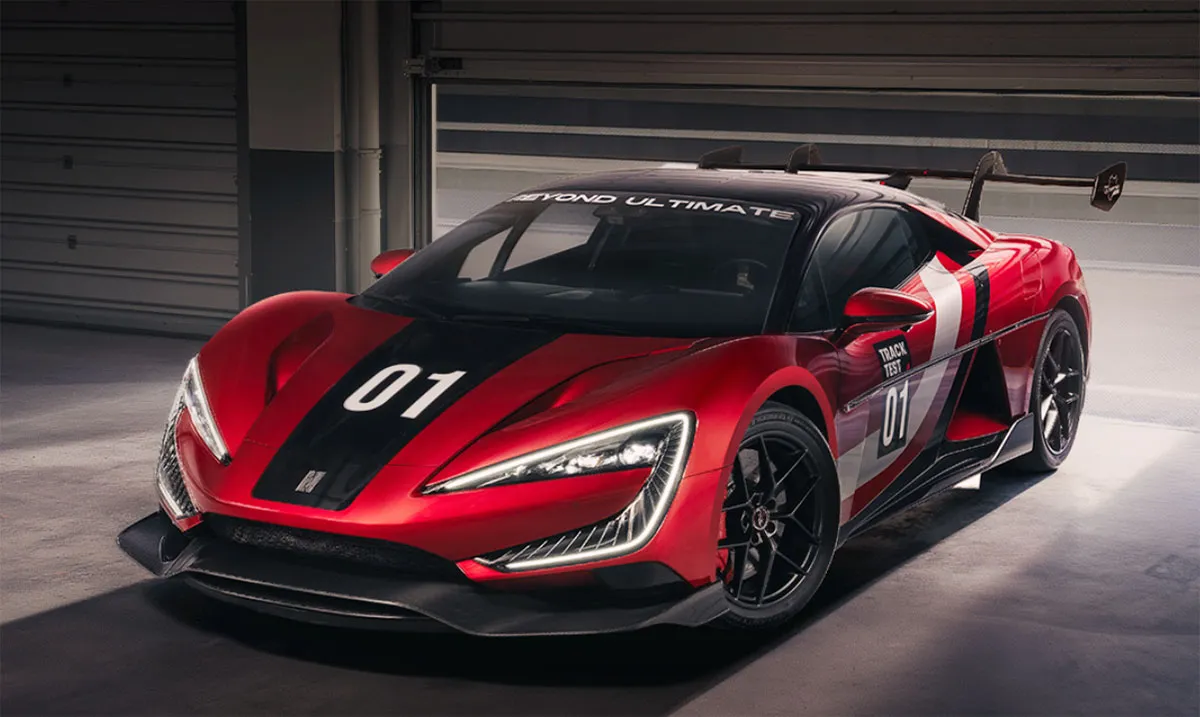
The biggest surprise in the modern speed race is the YANGWANG U9 Xtreme.
This Chinese electric hypercar reached an incredible 496.22 km/h (308.4 mph) at ATP Automotive Testing Papenburg in Germany on September 14, 2025. BYD describes the achievement as a new production-car top-speed record.
Instead of using a huge petrol engine, the U9 Xtreme uses four electric motors.
YANGWANG says the car produces more than 3,000 PS and uses advanced electric and active-control technology.
Key features
- Top speed: 496.22 km/h
- Power: 3,000+ PS
- Powertrain: Four electric motors
- Country: China
- Type: Electric hypercar
- Big achievement: First production EV to approach 500 km/h
The U9 Xtreme has changed the conversation around electric cars. They are no longer competing only on acceleration and efficiency—they are now challenging petrol cars at the very top of the speed ladder.
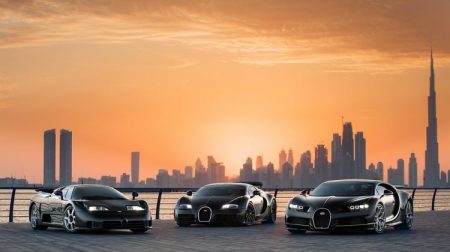
2. Bugatti Chiron Super Sport 300+ – 490.48 km/h


The car that broke the 300 mph barrier
For several years, the Bugatti Chiron Super Sport 300+ was the name everyone associated with extreme speed.
In 2019, a Chiron-based record car reached 490.484 km/h (304.773 mph).
That made it the first production-based car to cross the incredible 300 mph barrier.
The car is powered by Bugatti’s famous 8.0-litre quad-turbocharged W16 engine, producing around 1,600 hp.
Key features
- Top speed: 490.484 km/h
- Engine: 8.0-litre W16
- Power: 1,600 hp
- Turbochargers: 4
- Country: France
- Highlight: First production-based car beyond 300 mph
The Chiron Super Sport 300+ is an important part of automotive history because it showed that a road-derived car could reach a speed that once seemed impossible.
3. SSC Tuatara – 455.3 km/h


America’s high-speed challenger
The SSC Tuatara is an American hypercar designed specifically to challenge the world’s fastest cars.
Its most important verified result is a 455.3 km/h two-way average.
A two-way average is useful because the car travels in opposite directions, reducing the effect of wind and other environmental factors.
The Tuatara uses a 5.9-litre twin-turbocharged V8 capable of producing up to around 1,750 hp.
Key features
- Top speed: 455.3 km/h two-way average
- Engine: 5.9-litre V8
- Power: Up to 1,750 hp
- Turbochargers: Twin turbo
- Country: United States
- Highlight: Two-way speed record
The Tuatara proves that you don’t need a giant European luxury brand behind you to build one of the world’s fastest cars.
4. Bugatti W16 Mistral – 453.91 km/h


The world’s fastest open-top production car
Imagine travelling at more than 450 km/h with no roof above you.
That’s what makes the Bugatti W16 Mistral so special.
In November 2024, a one-off W16 Mistral World Record Car reached 453.91 km/h at ATP Papenburg in Germany. Bugatti says this made it the fastest open-top production car.
The Mistral uses Bugatti’s legendary 8.0-litre W16 engine producing 1,600 PS.
Key features
- Top speed: 453.91 km/h
- Engine: 8.0-litre W16
- Power: 1,600 PS
- Body: Open-top roadster
- Country: France
- Highlight: Fastest open-top production car
The Mistral is also significant because it represents the final road-going chapter of Bugatti’s famous W16 engine era.
5. Koenigsegg Agera RS – 446.97 km/h


Sweden’s record-breaking hypercar
The Koenigsegg Agera RS proved that a relatively small Swedish manufacturer could challenge the biggest names in the automotive industry.
In 2017, the Agera RS achieved an average speed of approximately 446.97 km/h over two runs in opposite directions.
Its secret wasn’t simply horsepower.
The car combines a lightweight carbon-fibre structure with a powerful 5.0-litre twin-turbo V8.
Key features
- Top speed: 446.97 km/h average
- Engine: 5.0-litre V8
- Power: Up to about 1,360 hp
- Construction: Lightweight carbon fibre
- Country: Sweden
- Highlight: Former production-car speed record holder
The Agera RS remains one of the most respected hypercars ever built.
6. Bugatti Tourbillon – 445 km/h


A new generation of Bugatti power
The Bugatti Tourbillon is very different from the Chiron.
Instead of the famous W16, Bugatti created an 8.3-litre naturally aspirated V16 engine combined with electric motors.
Together, the hybrid system produces approximately 1,800 hp.
Bugatti gives the Tourbillon a top-speed figure of around 445 km/h with its high-speed configuration.
Key features
- Top speed: 445 km/h
- Engine: 8.3-litre V16
- Power: 1,800 hp
- Powertrain: Hybrid
- Country: France
- Highlight: V16 + electric motors
The Tourbillon shows that Bugatti isn’t abandoning combustion engines completely. Instead, it is combining traditional engineering with modern electric technology.
7. Hennessey Venom F5 – 437+ km/h


America’s 500 km/h dream
The Hennessey Venom F5 was created with one huge ambition: become one of the fastest cars ever built.
Its 6.6-litre twin-turbo V8 produces approximately 1,817 hp.
Hennessey has demonstrated speeds above 270 mph during development, but the company has ambitions for much higher speeds.
Key features
- Tested speed: 437+ km/h
- Engine: 6.6-litre twin-turbo V8
- Power: 1,817 hp
- Construction: Carbon-fibre
- Country: United States
- Goal: Extreme top speed
The important point is that the 500+ km/h figure should be considered a target rather than a confirmed record until an official run demonstrates it.
8. Hennessey Venom GT – 435.31 km/h


A lightweight rocket from Texas
Before the Venom F5, there was the Hennessey Venom GT.
The car combined a lightweight body with a powerful twin-turbo V8.
In 2014, it reached 435.31 km/h (270.49 mph) at NASA’s Kennedy Space Center.
The run was impressive, although it wasn’t universally recognized as an official production-car record because it was a one-way run and the production volume was extremely limited.
Key features
- Top-speed run: 435.31 km/h
- Engine: Twin-turbo V8
- Power: Approximately 1,244 hp
- Country: United States
- Highlight: 270+ mph run
The Venom GT helped establish Hennessey as a serious name in the hypercar world.
9. Rimac Nevera R – 431.45 km/h


The electric hypercar from Croatia
The Rimac Nevera R shows how quickly electric performance technology has evolved.
The car uses four electric motors producing around 2,107 hp.
Rimac reports a top speed of 431.45 km/h.
But top speed isn’t its only impressive number.
The Nevera R can accelerate from 0 to 100 km/h in around 1.72 seconds, demonstrating the enormous advantage of electric motors when it comes to instant torque.
Key features
- Top speed: 431.45 km/h
- Power: 2,107 hp
- Motors: Four electric motors
- Country: Croatia
- Type: Electric hypercar
- Highlight: Extreme acceleration + top speed
The Nevera R is a perfect example of how software, electric motors and advanced battery technology are changing the hypercar industry.
10. Bugatti Veyron Super Sport – 431.07 km/h


6
The car that changed the hypercar world
Before the Chiron, there was the Bugatti Veyron Super Sport.
It used an enormous 8.0-litre W16 engine with four turbochargers and produced approximately 1,200 PS.
The Veyron Super Sport reached 431.07 km/h, becoming one of the defining high-speed cars of its era.
Key features
- Top speed: 431.07 km/h
- Engine: 8.0-litre W16
- Power: 1,200 PS
- Turbochargers: 4
- Country: France
- Highlight: Former world speed record holder
The Veyron proved that a car could combine extraordinary speed with luxury and everyday refinement.
Special Mention: Koenigsegg Jesko Absolut


The Koenigsegg Jesko Absolut deserves a special mention because it was designed specifically for extreme top speed.
Its body is optimized for low aerodynamic drag, while its 5.0-litre twin-turbo V8 can produce up to 1,600 hp on suitable fuel.
Koenigsegg has suggested extraordinary top-speed potential for the car.
However, its often-discussed 500+ km/h potential should not be confused with a verified record.
That’s why it is better to list the Jesko Absolut separately until a confirmed high-speed run is completed.
What Makes These Cars So Fast?
A huge engine alone cannot make a car reach 400 or 500 km/h.
Several technologies have to work together.
🚗 Aerodynamics
The body must move through the air with as little resistance as possible.
⚡ Power
Extreme speed requires enormous power to overcome aerodynamic drag.
🛞 Special Tyres
At 400+ km/h, tyres experience tremendous forces. Special high-speed tyres are essential.
🧠 Computer Control
Modern hypercars use sophisticated computers to manage power, suspension, traction and aerodynamics.
🪶 Lightweight Materials
Carbon fibre and other lightweight materials help reduce weight without sacrificing strength.
❄️ Cooling
Engines, batteries and electric motors produce enormous heat. Keeping everything at the correct temperature is critical.
Petrol vs Electric: Which Is Winning?
| Feature | Petrol Hypercar | Electric Hypercar |
|---|---|---|
| Instant torque | Very high | Excellent |
| Engine sound | Very high | Low |
| Energy density | Excellent | Lower |
| Acceleration | Extremely fast | Extremely fast |
| Top-speed development | Mature | Rapidly improving |
| Torque control | Complex | Very precise |
| Mechanical character | Strong | Different |
| Future potential | High | Very high |
The most interesting development is that electric cars are no longer only acceleration specialists.
The YANGWANG U9 Xtreme’s 496.22 km/h achievement demonstrates that electric technology is now challenging petrol-powered hypercars at the highest level.
The Race to 500 km/h
The next great milestone is simple:
500 km/h
The YANGWANG U9 Xtreme has reached 496.22 km/h—just 3.78 km/h short of the 500 km/h mark.
That means the world’s fastest production cars are now closer than ever to breaking another major barrier.
Will the next record come from an electric car?
Will Bugatti return with another extreme machine?
Could Koenigsegg’s Jesko Absolut deliver its promised potential?
Or will Hennessey surprise the world?
Nobody knows.
And that uncertainty is what makes the world’s fastest car competition so exciting.
Frequently Asked Questions
What is the fastest car in the world in 2026?
The YANGWANG U9 Xtreme has the highest demonstrated production-car top-speed figure in this article, reaching 496.22 km/h at ATP Papenburg in Germany.
Has any production car reached 500 km/h?
Not yet in the demonstrated production-car runs discussed here. The YANGWANG U9 Xtreme has come extremely close at 496.22 km/h.
What is the fastest Bugatti?
The Bugatti Chiron Super Sport 300+ reached 490.484 km/h in its famous record run.
What is the fastest electric car?
The YANGWANG U9 Xtreme currently has the highest demonstrated top-speed figure among the cars covered here, at 496.22 km/h.
What is the fastest open-top car?
The Bugatti W16 Mistral World Record Car reached 453.91 km/h, setting a world record for an open-top car.
Final Thoughts
The world’s fastest cars show how far automotive engineering has come.
The Bugatti Veyron pushed the world beyond 400 km/h.
The Koenigsegg Agera RS proved that a small manufacturer could dominate the speed race.
The Bugatti Chiron Super Sport 300+ broke the 300 mph barrier.
The Rimac Nevera R showed what electric power could achieve.
And the YANGWANG U9 Xtreme has brought the industry within touching distance of 500 km/h.
The next few years could be some of the most exciting in automotive history.
The 500 km/h barrier is no longer a dream. It is the next target.